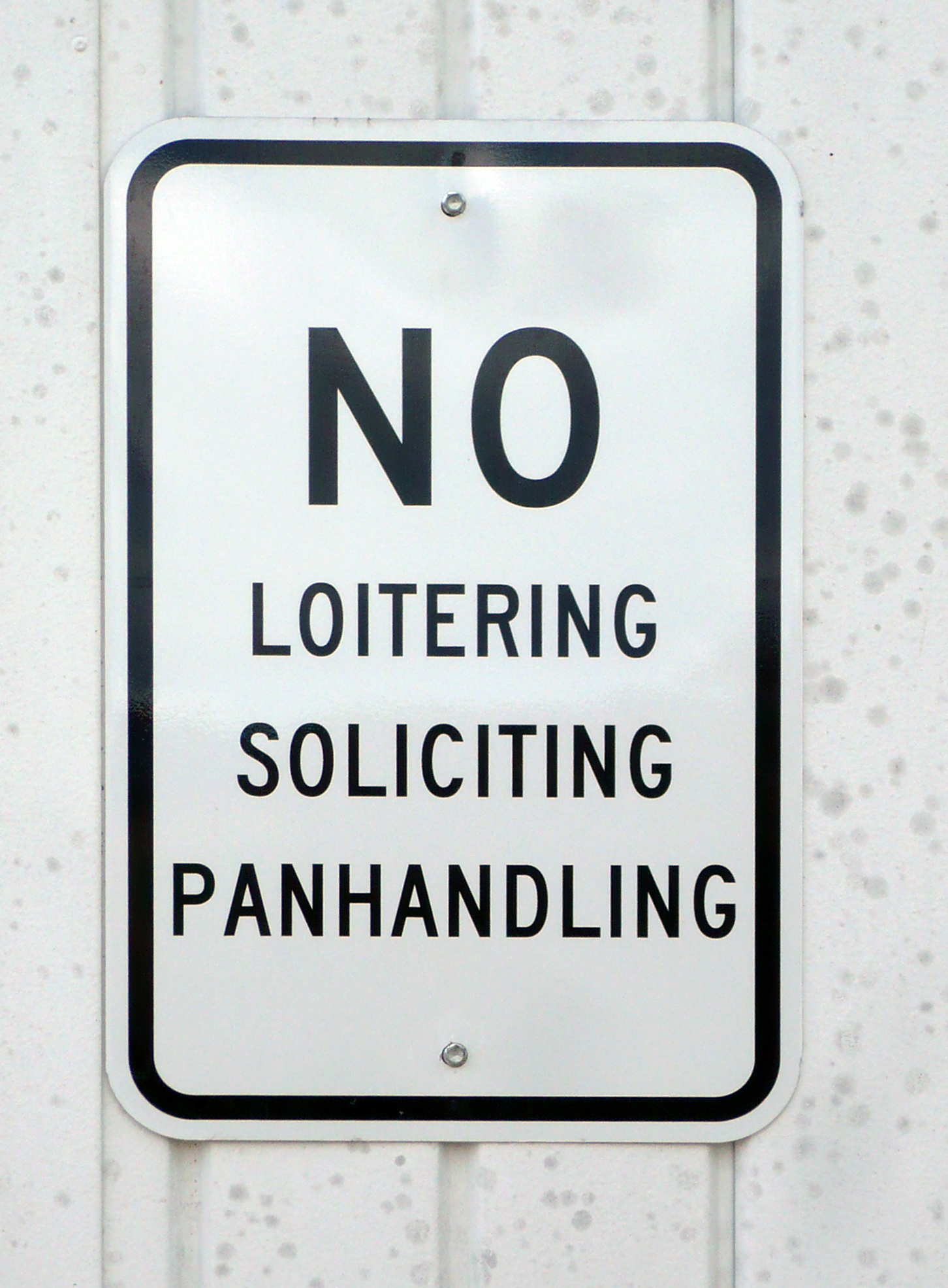
Sunday, November 13, 2016

Donations in Florida


For my final post I have chosen a news article from Florida. The difference between this article and the others I have discussed, is that in the other posts I talked about panhandling and the inconvenience and dangers that are associated with it, but I haven’t talked about any solutions that have been discussed.
The article I chose was “Tampa Anti-Panhandling OrdinanceOverturned” published by FOX13 News. Prior to the ban being overturned in Tampa, Florida, the Tampa City council felt that they should limit the sight of panhandlers from tourists, by creating zones where panhandlers/homeless could inhabit. A homeless advocate didn’t share the same Views as the city council. The ordinance to limit panhandling to specific areas was harming is organization. The homeless advocates organization relied on their clients (the homeless) and donations from the community, and without those donations, the organization is limited in funds to help the homeless. He felt that the homeless were being targeted, because people were still allowed to ask for signatures for a petition, but asking
 for a donation was prohibited.
A year later, a judge ruled that donations or payments are protected under our first amendment. Now that people can ask for donations, the organization is eager to get donations again.

While exploring all my sources, my thinking has changed. Before this exploratory blog, I was very one-sided. This blog gave me a chance to see different views on Panhandling. I’ve learned that there are many organizations dedicated to helping the homeless/panhandlers. I’ve also learned that there are people that see the upsides and downsides of panhandling, such as the feeling that they only want your money to buy drugs and alcohol, while others believe that the money they give goes to survival needs. I’m still wondering if the overturned ban in Greeley, Colorado has any drawbacks or if it has been really beneficial. Currently I’m still trying to figure out what I want to argue in my final essay.
The article left me with some question for instance, the zones that they set aside to keep panhandlers away from tourists, where were they located? how where they going to eat without the help of others? How is asking for signatures and asking for money different, if they both soliciting something. In regards to all the articles I've read, why did it take so long to realize that asking for money is freedom of speech? 

Wednesday, November 9, 2016

Public Safety

The source that I decided to look into today is located in Omaha. The reason that I chose to research this article/interview is because panhandling in Omaha has become a public safety.
The article “Omaha City Prosecutor Warns Dangers Of Panhandling,” published by KETV OMAHA on June 8th, 2015. The article/interview discussed that while panhandling is legal distracting drivers while begging for money is still illegal. The reporter talked to a panhandler in regards to what happens when he is out there. The panhandler stated that he sometimes gets food or money. He continues to say that in the 3.5 hours that he had been there; he received $45. That is about $12.86 an hour. For this amount of money; they put their lives at risk, standing at intersections asking for money. The police chief stated that tickets are seen regularly, so he feels like something is being done to insure the safety of all involved.
The charities that are provided for the homeless and panhandlers feels strongly about not giving them money, because their necessities are provided through the charities, while others don’t share the same felling as the charities. They feel as if the charities have too many regulations.

This article made me wonder, how are the charities asking too much of the panhandlers/homeless they help?

Sunday, November 6, 2016

Panhandling Prior To The Ban

Last year an interview between Ryan Warner and Mark Silverstein was conducted and published by CPR. The interview discussed the panhandling ordnances in Northern Colorado. Prior to the ban being overturned; The American Civil liberties Union of Colorado found the ban to be in violation of our First Amendment. In trying to regulate panhandling the cities found that there was an appropriate time and place; when panhandling could occur with out the overwhelming fear for ones safety. The interview went on and brought up the possible punishments for violating the panhandling ban. One of the cities in northern Colorado was found to be violating one of the panhandling ordinances. They cited people for aggressive panhandling while they did nothing, but hold up a sign. The city attorney issued a two paged bulletin to police; trying to cease the writing of citations for one of the ordinances. The city’s prosecutor worked on dismissing some of the convictions. Mark Silver continued by stating that our resources should be more geared towards housing and other services for the homeless and poverty stricken.
While reading/listening to this source I have found a few things that were shocking. What I found the most shocking was that fact that it’s a misdemeanor that is punishable by up to one year in prison and a fine of up to $2,500. The second thing that I found shocking was the police were enforcing the panhandling regulations against people that didn’t violate any laws.  
The interview left me with some questions.
  • The ban is protected under out first amendment, why are the punishments so harsh?
  • What if the panhandlers don’t want the services that ACLA wants to gear towards them?
  • Why were the police so aggressive if they were only holding up signs?


Wednesday, November 2, 2016

The Overturned Ban

The topic that I chose to research is panhandling in Northern Colorado and how it affects the residents. Panhandling sparked my interest, because I’ve noticed and increase in the population of panhandlers on my way to work. A few weeks ago I was driving to work, when I came across a man peacefully begging for money on the sidewalk of an intersection. All I could think about while waiting at the stoplight was what would happen if he were to walk into the intersection to retrieve money from the stopped cars. Recently the ban on panhandling was overturned in Greeley and I have taken an interest in what our community will experience since the ban was overturned.
 The first source that I decided to share is “Greeley City Council Strips Controversial Panhandling Ordinance From The Books,” published by The Tribune on October 18, 2016. The article discussed the many aspects of the overturned ban. Last year the Supreme Court ruled that begging was protected under the first amendment. That same year the American Civil Liberties Union contacted Greeley regarding the panhandling ban and ordered law enforcement to stop enforcing the ban. Police Chief Jerry Garner said “It brought them in compliance with the supreme Court.” Garner went on to say that the ban wouldn’t make a difference in regards to aggressive panhandlers. People are allowed to hold up signs and verbally ask for money without any repercussions, but if it gets physical or they threaten the residents, then an arrest can still be made.
 I believe that there is still time to see the effects the overturned ban, whether it was the best decision for our community.
 The article left me with only a few question. 
  •  After reading this article, I wonder why panhandling in a median doesn’t have a harsher punishment? 
  • What is the worst punishment for aggressive panhandling?
  • Why did it take the supreme court ruling to change the bans in all the cities.
  • What do you do if a panhandlers becomes aggressive.